
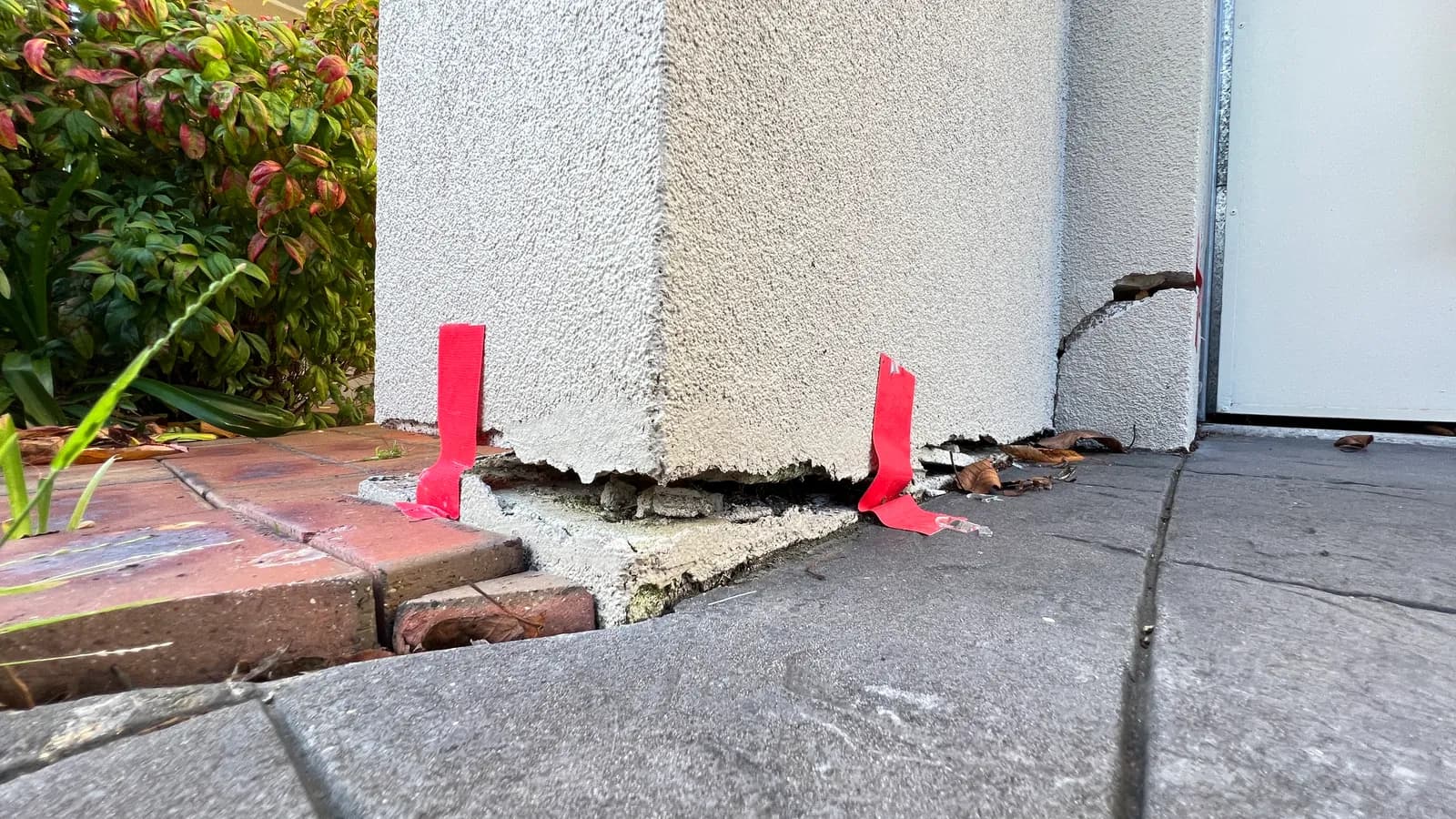
Dilapidation Reports
Before construction or demolition starts next door, we document the existing condition of every neighbouring property. The dated, photographed record protects you from disputes when works are done — and protects your neighbours from genuine damage going unchecked.
A proper look,
not a quick glance.
A comprehensive photographic and written record of a property's current condition, conducted before nearby construction, demolition, or excavation work begins. It provides a dated baseline that can be referenced if damage is alleged post-construction.
Ideal for
- Developers and builders commencing works near existing properties
- Property owners undertaking renovations or demolition
- Neighbouring property owners seeking independent protection
- Councils or bodies corporate requiring pre-works documentation
What we inspect,
end to end.
Exterior walls — cladding, brickwork, render, paintwork, visible cracking
Interior walls and ceilings — existing cracks, nail pops, plaster condition
Flooring — tiles, timber, carpet condition, level changes
Windows and doors — frames, glass, operation
Wet areas — bathrooms, laundry, kitchen (existing water damage or staining)
Driveways, paths, and paving — cracking, settlement, drainage
Fencing and retaining walls — condition, lean, cracking
Roof (external visual) — condition of covering, gutters, downpipes
Garden landscaping — proximity to construction zone
The stakes are
higher than they look.
Without a pre-construction record, any existing damage can be falsely attributed to construction works — leading to expensive disputes, delays, and legal costs.
How we do it
differently.
Every elevation, room, and surface is systematically documented with high-resolution photography and matching written descriptions. The level of detail is built for dispute resolution — because that's what these reports get used for.
From booking
to confident decision.
Book & Coordinate
Contact us with project details. We'll coordinate access with neighbouring property owners and schedule the inspection to align with your construction timeline.
Systematic Documentation
Our consultant conducts a room-by-room, elevation-by-elevation assessment, photographing and documenting all existing conditions in detail.
Report Compilation
A comprehensive report is compiled with all photographs, written descriptions, and baseline measurements — formatted for professional and legal use.
Distribution
Reports are delivered to all relevant parties as needed — developer, builder, neighbouring owners, and project managers.
A report that's
detailed and clear.
Comprehensive reporting delivered through a configurable client portal — accessible across devices, with a streamlined experience that puts every finding, photo, and recommendation a tap away.
Fast. Thorough.
Decision-ready.
Two to three business days, since the photographic record is exhaustive. If your construction kick-off is locked in, tell us early and we'll work to it.
Questions,
answered.
Still curious? Give us a call — we're happy to walk through anything specific to your property.
Who typically commissions a dilapidation report?
When should the report be done?
Do you inspect the neighbouring property or the construction site?
Can the neighbour refuse access for an inspection?
Is a dilapidation report legally required?
Often paired
with this inspection.

Book dilapidation reports
with confidence.
Limited daily availability. Get in touch to discuss your property and schedule your inspection — no obligation.